By the summer of 1942, Adolf Hitler was obsessed with a city. Not because of its strategic value as an industrial center on the Volga River, though it was certainly that. Not because capturing it would sever a vital Soviet supply line, though it would do that too. Hitler wanted Stalingrad because it bore the name of his greatest enemy. And Joseph Stalin, for exactly the same reason, was determined never to let it fall. This collision of egos would turn a city into a graveyard and produce the deadliest battle in the history of warfare.
The German 6th Army, commanded by General Friedrich Paulus, was the pride of the Wehrmacht — a battle-hardened force that had swept through France, Poland, and deep into the Soviet Union. As part of Case Blue, Hitler's grand summer offensive of 1942, the 6th Army was directed southeast toward the Volga while Army Group A pushed into the Caucasus to seize Soviet oil fields. The original plan treated Stalingrad as a secondary objective. Hitler's obsession would change that.
Quick Facts
The Bombing of August 23rd
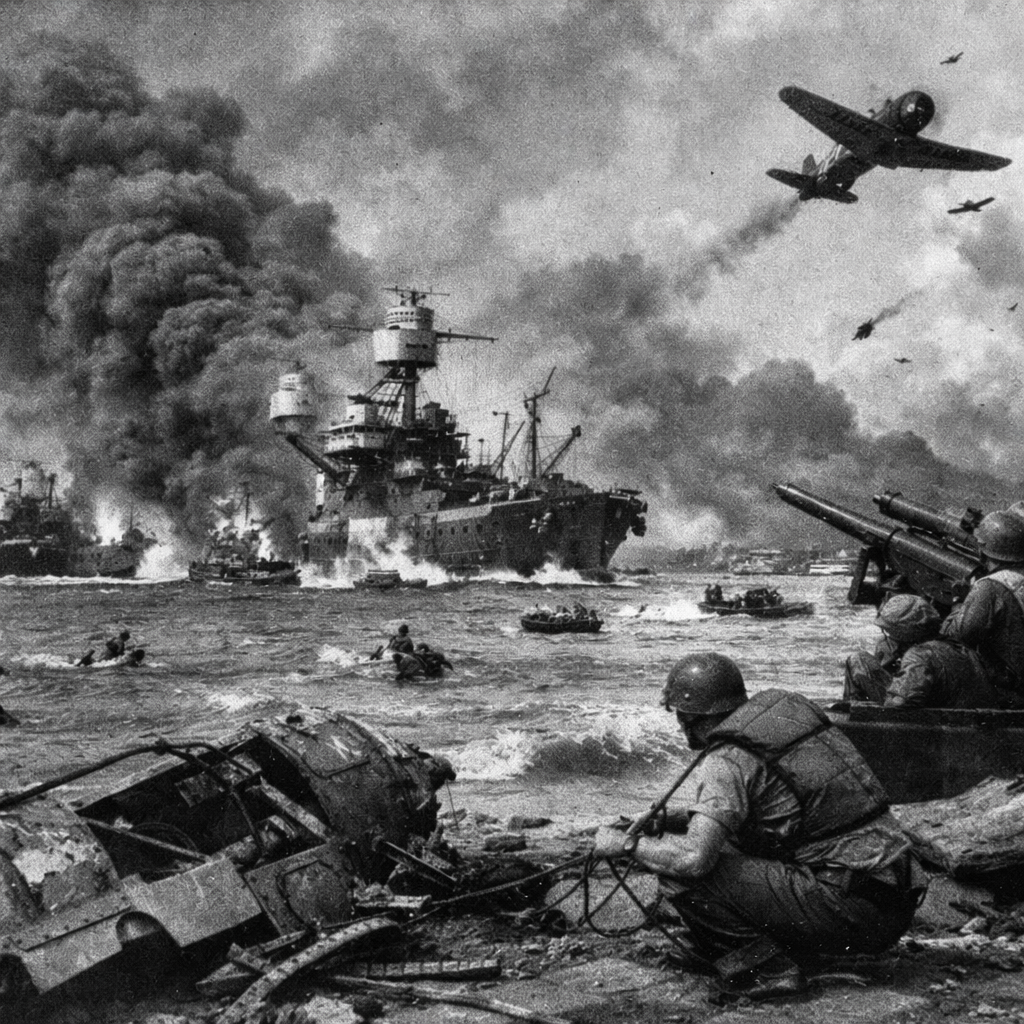
The battle announced itself from the sky. On August 23, 1942, the German Luftwaffe launched one of the most devastating aerial bombardments of the entire war. Over 1,000 sorties rained incendiary and high-explosive bombs on the city, turning its wooden residential districts into an inferno. An estimated 40,000 civilians were killed in a single day. The Volga itself seemed to catch fire as oil storage tanks along the riverbank exploded. By nightfall, the city that had been home to over 400,000 people was a burning skeleton of concrete and twisted steel.
But the destruction that was meant to break Soviet resistance instead created the perfect defensive terrain. The rubble of apartment blocks, factories, and office buildings became a labyrinth of fighting positions. Basements became bunkers. Sewer systems became supply routes. The wide boulevards where German tanks and mechanized infantry had expected to roll through in triumph were now impassable mazes of debris.
Rattenkrieg — The War of the Rats
The Germans called it Rattenkrieg — the war of the rats. The Soviets simply called it hell. As German forces pushed into the city in September and October, the fighting devolved into something unprecedented in modern warfare: savage, close-quarters combat where control of a single building could change hands dozens of times in a single day.
"The distance between the enemy and us is as small as ever. Despite the constant fighting, we cannot break through to the Volga. The Russians are not men, but some kind of cast-iron creatures."
— A German officer's letter home from Stalingrad, October 1942
The most famous of these engagements centered on a four-story apartment building defended by a small group of soldiers under Sergeant Yakov Pavlov. For 58 days, Pavlov's men held this single building against wave after wave of German assaults, turning it into a fortress with minefields, barbed wire, and machine gun positions covering every approach. On German military maps, Pavlov's House was marked as a fortress. It became a symbol of the entire defense: ordinary men performing extraordinary acts of endurance.
Soviet commanders, particularly General Vasily Chuikov, who led the 62nd Army defending the city, developed tactics specifically designed for urban combat. Small storm groups of six to eight soldiers would infiltrate German positions at night, using grenades and submachine guns in close quarters where German advantages in artillery and air power were neutralized. Snipers haunted the ruins — most famously Vasily Zaitsev, whose exploits became legendary among both Soviet troops and German intelligence.
The Grain Elevator and the Factories
Certain landmarks became bywords for the ferocity of the fighting. The massive grain elevator near the river was fought over for weeks, its concrete walls scarred by thousands of bullet impacts. The great industrial complexes — the Barrikady gun factory, the Red October steel works, and the Stalingrad Tractor Factory — became battlefields unto themselves, with Soviet workers sometimes joining the fighting directly from their shifts.
At its most desperate, the Soviet defensive perimeter was pressed back to a strip barely 300 meters wide along the Volga riverbank. German soldiers could see the river. They could hear the barges that crossed it nightly, bringing reinforcements and supplies under constant fire. But they could never quite reach it. Every block, every building, every floor extracted a price in blood that the Germans were slowly running out of capacity to pay.
Operation Uranus — The Trap Closes
While the world's attention was fixed on the inferno inside the city, Soviet generals Georgy Zhukov and Aleksandr Vasilevsky were planning something far grander. Throughout the autumn of 1942, the Red Army had been quietly massing enormous reserves on the flanks of the German salient — the long, exposed corridor stretching from the Don River to Stalingrad. The flanks were held not by the formidable German troops, but by weaker Romanian, Hungarian, and Italian allied armies, stretched thin and poorly equipped for the Russian winter.
On November 19, 1942, Operation Uranus was launched. Over one million Soviet soldiers, supported by nearly 1,000 tanks, struck the Romanian positions north and south of Stalingrad simultaneously. The Romanian lines collapsed within hours. Within four days, the two Soviet pincers met at the town of Kalach, west of Stalingrad. The entire German 6th Army — roughly 270,000 men — was encircled.
It was a masterpiece of military planning, and it presented the Germans with a catastrophic dilemma. Paulus wanted to break out while there was still time. His officers believed it was possible if they moved immediately. But Hitler, who had staked his prestige on taking the city, refused. He ordered the 6th Army to hold its positions and promised that Hermann Göring's Luftwaffe would supply the trapped army by air.
The Airlift That Failed
Göring promised to deliver 500 tons of supplies per day. The 6th Army needed a minimum of 700 tons to survive. In practice, the Luftwaffe never delivered more than 120 tons on its best day, and most days delivered far less. Soviet anti-aircraft guns and fighter planes turned the supply corridor into a gauntlet. Transport aircraft were shot down by the dozens. The supplies that did get through were often the wrong items — crates of medals and decorations arriving in a pocket where men were starving.
As December turned to January, conditions inside the pocket became apocalyptic. Temperatures dropped to minus 30 degrees Celsius. Food rations were cut to a few ounces of bread per day. Horses were slaughtered and eaten, then the rats. Frostbite, typhus, and dysentery ravaged the weakened troops. Wounded soldiers, unable to be evacuated, froze to death in makeshift hospitals. The proud 6th Army was disintegrating.
The End
On January 10, 1943, the Soviets launched Operation Ring, the final offensive to destroy the pocket. German resistance, though weakened, was still fierce in places, but there was no longer any hope. On January 30 — the tenth anniversary of Hitler's rise to power — Paulus was promoted to Field Marshal. It was a pointed message: no German Field Marshal had ever surrendered. Hitler expected Paulus to take his own life.
He did not. On January 31, 1943, Paulus surrendered. Fighting continued in isolated pockets for two more days before the last German resistance ceased on February 2. Of the roughly 270,000 men who had been trapped, about 91,000 went into Soviet captivity. Most were already walking dead — starved, sick, frostbitten. Of those 91,000 prisoners, only about 5,000 would ever return to Germany.
"The God of War has gone over to the other side."
— Field Marshal Friedrich Paulus, upon surrendering at Stalingrad
The Turning Point
Stalingrad was more than a battle — it was the hinge on which the war turned. Before Stalingrad, German victory seemed plausible, even likely. After Stalingrad, it was only a matter of time. The myth of Wehrmacht invincibility, carefully cultivated since the fall of France in 1940, was shattered beyond repair. The strategic initiative on the Eastern Front passed permanently to the Soviet Union.
The psychological impact was equally devastating. In Germany, three days of national mourning were declared — the first time the regime had publicly acknowledged a catastrophe of this magnitude. Across occupied Europe, resistance movements took heart. The message was unmistakable: the Germans could be beaten.
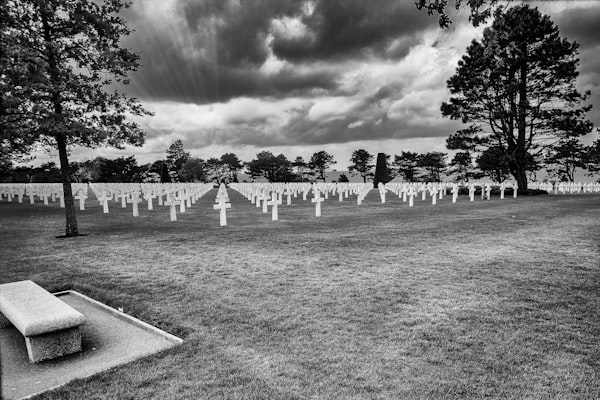
Today, the city is called Volgograd, renamed in 1961 during de-Stalinization. But the battle's memory is preserved in monuments, museums, and the famous statue of The Motherland Calls on Mamayev Kurgan — the hill that changed hands countless times during the fighting. Standing 85 meters tall, she looks out over a city that was destroyed, rebuilt, and forever marked by five months of fighting that cost nearly two million casualties. It remains, to this day, the deadliest battle in human history.